Based in Hyderabad, Telangana, Dr. Varun Raju has spent decades building a career that extends well beyond the operating room. He has worked as a professor of surgery, trained postgraduate surgeons, contributed to surgical literature, authored books, created medical illustrations for international publications
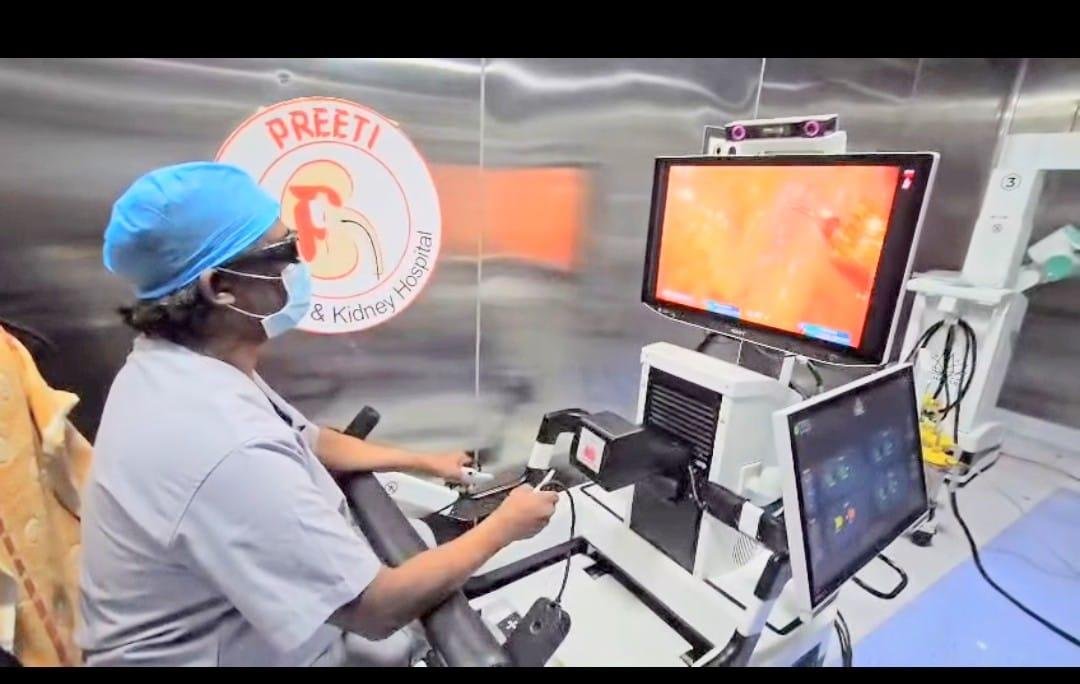
Dr. Varun raju thirumalagiri is performing advanced Robotic surgery procedure.
From a Teacher’s Family in Miryalaguda to Building a Dedicated Centre for Laparoscopic Surgical Training in Hyderabad
Medicine is often described as a profession of knowledge and precision. But the careers of exceptional surgeons are rarely defined by surgical skill alone.
They are built through years of learning, teaching, research, writing, mentoring and an unwavering commitment to improving the way medicine is understood and practiced.
Dr. Varun Raju Thirumalagiri, an Advanced Laparoscopic and Robotic Surgeon, represents such a multidimensional journey.
Based in Hyderabad, Telangana, Dr. Varun Raju has spent decades building a career that extends well beyond the operating room. He has worked as a professor of surgery, trained postgraduate surgeons, contributed to surgical literature, authored books, created medical illustrations for international publications, participated in scientific research and helped develop a dedicated environment for laparoscopic surgical education.
At the centre of this journey is TVR Laparoscopy Center, located at Madinaguda, Hyderabad.
What began in 2020 as a surgery clinic gradually evolved into a dedicated laparoscopic surgery training centre, creating an educational platform through which surgeons could gain practical exposure to advanced minimally invasive surgical techniques.
Today, the institution reflects Dr. Varun Raju's larger philosophy of medicine: a surgeon's responsibility does not end with performing an operation; it also includes teaching the next generation how to perform better surgery.
A Journey That Began in a Teacher's Family
Long before the operating theatres, surgical textbooks and advanced laparoscopic procedures, Dr. Varun Raju's story began in a comparatively modest setting.
He was born in Miryalaguda, Nalgonda district, Telangana, as the eighth son in a teachers' family.
Growing up in an environment shaped by education and discipline had a lasting influence on his professional outlook.
The culture of teaching, learning and academic commitment would eventually become an important part of his own career.
His medical journey took him to Kurnool Medical College, where he belonged to the 1988 MBBS batch.
After completing his undergraduate medical education, he pursued postgraduate surgical training through the National Board of Examinations (NBE), New Delhi.
His postgraduate years exposed him to senior surgeons and mentors, including surgeons with FRCS backgrounds, while reinforcing the importance of academic discipline, punctuality, technical precision and professional responsibility.
For Dr. Varun Raju, surgery was never simply about learning how to operate.
It was about understanding why an operation should be performed, how it could be performed better and how that knowledge could ultimately be transferred to another surgeon.
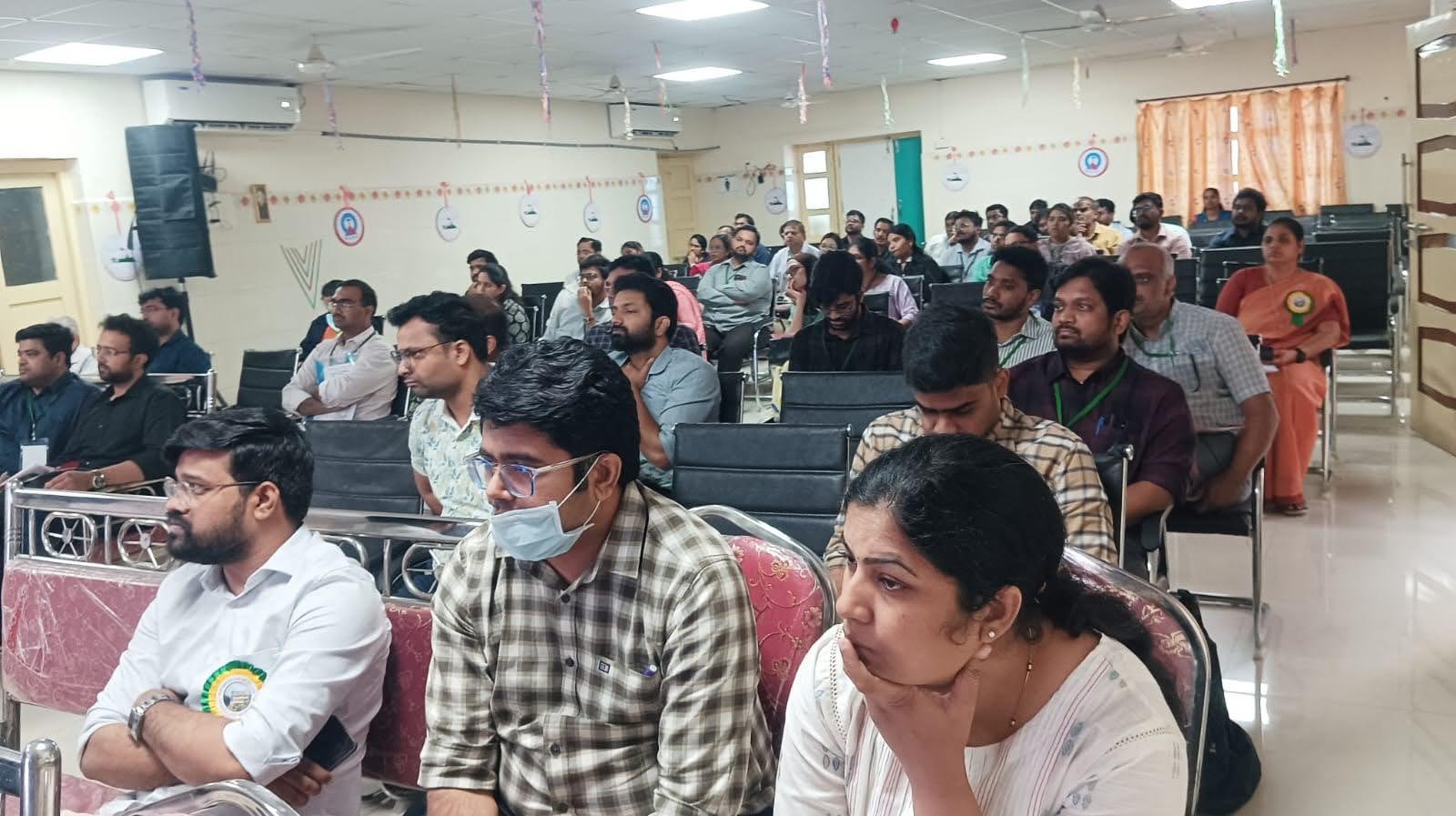
Live laparoscopic Hernia workshops conducted by Dr varun raju thirumalagiri
Building Expertise Beyond Conventional Surgical Training
The evolution of modern surgery has created an increasingly specialised landscape.
Laparoscopic surgery, advanced minimally invasive procedures, robotic surgery, hepatopancreatobiliary surgery and abdominal wall reconstruction all require specific technical understanding and extensive hands-on experience.
Dr. Varun Raju continued to expand his expertise through advanced surgical fellowships and professional qualifications, including:
FIAGES – Fellow of the Indian Association of Gastrointestinal Endo-Surgeons
FMAS – Fellowship in Minimal Access Surgery
FALS – Fellowship in Advanced Laparoscopic Surgery
Advanced exposure in HPB (Hepato-Pancreato-Biliary) surgery
Advanced training and professional involvement in hernia surgery
These experiences helped shape a career focused strongly on minimally invasive and advanced laparoscopic surgery.
But technical qualification was only one part of the journey.
The other was education.
The Professor Who Chose to Keep Teaching
Dr. Varun Raju has served as a Professor of Surgery through the National Board of Examinations at different institutions involved in postgraduate DNB surgical education in Hyderabad.
Teaching postgraduate surgeons requires a fundamentally different level of understanding.
A surgeon may be capable of performing a complex procedure, but teaching another surgeon to perform it safely requires the ability to break that procedure into principles, decisions, anatomical relationships, technical steps and potential complications.
This educational experience became one of the defining elements of Dr. Varun Raju's career.
He has served as an internal and external examiner for postgraduate General Surgery examinations, contributing to the academic evaluation and development of surgical trainees.
For him, education has remained closely connected to clinical practice.
The operating theatre becomes a classroom.
The classroom becomes a place for discussion.
And research becomes the bridge between established knowledge and future surgical practice.
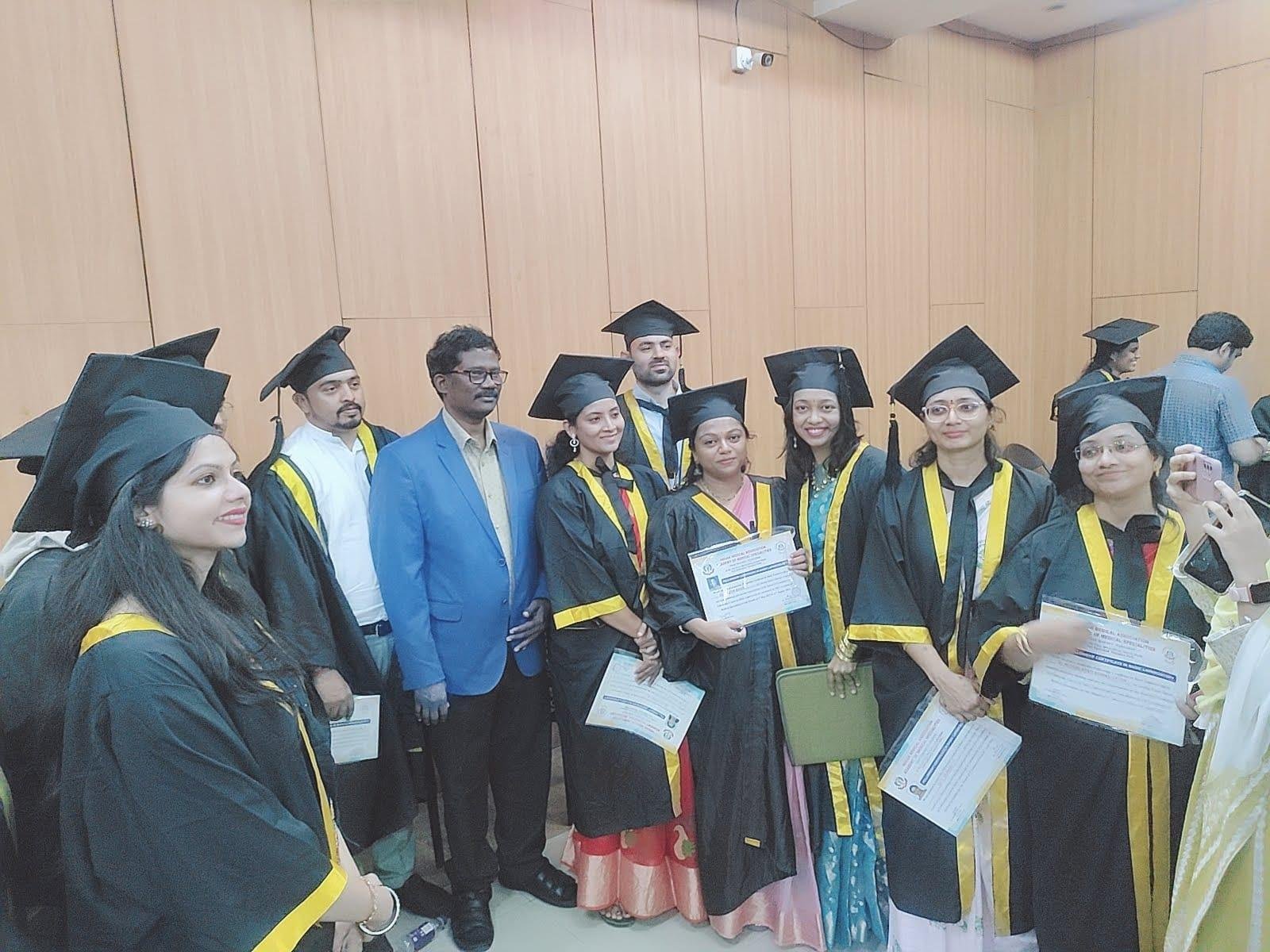
Fellowship course Convocation to my students at Hyderabad Telangana.
TVR Laparoscopy Center: From Surgical Clinic to Training Institution
In 2020, Dr. Varun Raju established TVR Laparoscopy Center in Madinaguda, Hyderabad.
Initially conceived as a surgery clinic, the centre gradually developed into something broader: a dedicated environment for laparoscopic surgery education and hands-on surgical training.
This evolution reflects an important reality in minimally invasive surgery.
Watching a procedure is not the same as performing it.
Understanding a surgical technique theoretically is not the same as developing the hand-eye coordination, instrument handling, spatial awareness and decision-making required to perform it safely.
Practical exposure therefore becomes critical.
TVR Laparoscopy Center developed a dedicated training model incorporating a nationally endorsed IMA-AMS four-month fellowship training programme.
Through its hands-on training programme, surgeons from different parts of India have undergone training and subsequently continued their surgical careers across various states.
The centre's educational philosophy is built around the idea that advanced surgery becomes more meaningful when knowledge is transferred.
One surgeon's experience can therefore become the foundation for many more surgeons' professional development.
Training Surgeons for the Era of Minimally Invasive Surgery
Laparoscopic surgery has fundamentally changed the expectations surrounding surgical care.
Smaller incisions, reduced tissue trauma, shorter recovery periods in appropriate procedures and improved visualisation have made minimally invasive surgery an integral part of modern surgical practice.
But the technology also introduces its own challenges.
The surgeon no longer operates with the same direct tactile and visual relationship available in open surgery.
Instead, the surgeon must understand anatomy through a camera, manipulate long instruments and interpret a two-dimensional or enhanced visual field while maintaining precise control.
This requires specialised training.
The role of a centre such as TVR Laparoscopy Center therefore extends beyond introducing surgeons to laparoscopic instruments.
It is about helping surgeons develop the confidence and technical understanding necessary to incorporate minimally invasive techniques into their professional practice.
A Surgeon Who Became an Author
Dr. Varun Raju's contribution to surgery is not restricted to clinical work.
He is also a surgical textbook author, with books addressing important aspects of surgical history, laparoscopic practice and clinical thinking.
His published works include:
Timeline History of Laparoscopy and Hernia Surgery
The book explores the evolution of laparoscopic and hernia surgery, providing perspective on how techniques and surgical thinking have developed over time.
Understanding surgical history has a practical value.
Modern techniques rarely emerge suddenly. They are usually the result of decades of experimentation, technological development, clinical observation and refinement.
SCOPY
His work SCOPYreflects his engagement with laparoscopic surgery and the broader evolution of minimally invasive surgical practice.
Think Again
With Think Again, Dr. Varun Raju moves toward another important dimension of medical practice: the importance of questioning assumptions and approaching clinical decisions with a critical mindset.
For a surgeon and educator, the ability to rethink established approaches can be as important as memorising established techniques.
A 2,000-Page Surgical Reference in the Making
Among the most significant literary projects associated with Dr. Varun Raju is his forthcoming work:
Textbook of Hernia and Abdominal Wall Reconstruction
The reference book is planned as an extensive approximately 2,000-page surgical textbook and is being published by Springer in the United States, with release planned for December 2026.
The scale of such a project reflects the complexity of modern abdominal wall surgery.
Hernia surgery is no longer viewed simply as closing a defect.
Contemporary abdominal wall reconstruction can involve detailed anatomical understanding, mesh selection, fixation principles, component separation techniques, reconstruction strategies and management of complex or recurrent cases.
A comprehensive reference dedicated to these subjects has the potential to serve surgeons, trainees and academic readers seeking a deeper understanding of abdominal wall reconstruction.
For Dr. Varun Raju, writing therefore becomes another form of teaching.
The operating theatre teaches through experience.
The classroom teaches through interaction.
A textbook teaches across generations.
The Surgeon as Medical Illustrator
Perhaps one of the more unusual dimensions of Dr. Varun Raju's career is his work as a medical and surgical illustrator.
Complex surgery often depends on visual understanding.
A written explanation can describe an anatomical relationship, but a carefully constructed illustration can sometimes communicate that relationship more effectively.
Dr. Varun Raju has developed recognition within the surgical community for his medical illustrations and has worked as a chief illustrator for chapters in international surgical books.
This combination of surgical knowledge and visual communication creates a rare professional intersection.
A surgeon understands the anatomy.
An illustrator understands how to represent it.
Combining the two allows complex surgical concepts to be communicated in a form that can be studied and remembered.
For postgraduate education, this can be particularly valuable.
Surgical illustration is therefore not simply an artistic exercise.
It becomes another language of medical education.
Bridging Surgery and Biomedical Engineering
Dr. Varun Raju's academic involvement also extends beyond conventional medical education.
He has been associated as a PhD board member in Biomedical Engineering at Osmania University, Telangana, reflecting his long-standing engagement with teaching General Surgery to engineering students.
His association with engineering education dates back to 2003.
The connection between surgery and engineering is becoming increasingly important.
Modern surgical practice increasingly depends on technology:
Surgical robotics
Medical imaging
Computer-assisted surgery
Surgical instrumentation
Biomaterials
Prosthetic devices
Simulation technology
Artificial intelligence
Digital healthcare systems
A surgeon who understands both clinical requirements and engineering perspectives can contribute to conversations that extend beyond traditional medicine.
This interdisciplinary approach is increasingly relevant to the future of healthcare.
A Surgeon, Author and Thinker
Dr. Varun Raju Thirumalagiri is also a distinguished author whose literary work extends beyond the boundaries of medicine. His books explore surgical history, science, psychology, philosophy, human perception, social beliefs and the way people understand the world around them.
Among his notable works are Timeline History of Laparoscopy and Hernia Surgery, SCOPYand Think Again. His forthcoming major reference work, Textbook of Hernia and Abdominal Wall Reconstruction, represents another significant contribution to surgical literature.
1. SCOPY – Exploring Science, Psychology and Philosophy
SCOPYis a book that brings together science, psychology and philosophy, built around the idea that a person's vision and understanding of an object can change depending on the distance from which it is viewed.
The book presents a simple yet powerful observation about perspective.
A small grain of a salt crystal, for example, may appear like a mountain when viewed through a microscope. At the same time, the enormous Sun, when viewed from the Earth, appears comparatively small.
The object itself has not changed.
What has changed is the distance and perspective of the observer.
This central idea forms an important part of SCOPY—that the way a person sees something can influence the way that person understands it.
Through the combination of science, psychology and philosophy, the book explores how perception can change according to the position and scale from which something is observed.
The microscope and the distant view of the Sun provide two contrasting examples of the same principle: an object can appear completely different when viewed from different distances.
SCOPYtherefore takes a scientific observation and connects it with a broader understanding of human vision and perception.
2. THINK AGAIN – Science, Beliefs, Facts and Indian Cultural Life
Think Againis a novel built around a debate organised by a village head, who brings together different scientists and common people to discuss various beliefs and the facts associated with them.
The novel creates a setting where different viewpoints are presented openly.
Scientists bring their understanding of scientific facts, while common people bring their beliefs, experiences and perspectives.
The discussions explore the differences between beliefs and scientific facts, while allowing both sides to express their viewpoints.
Rather than simply presenting the discussion as a conflict in which one side must defeat the other, the novel moves toward a broader conclusion: both perspectives should be respected, while also understanding the importance of India's cultural system and the traditional ways in which families and communities maintain their lifestyles.
This creates a central theme of Think Again: people can question, discuss and examine different beliefs while still maintaining respect for cultural values and family traditions.
The village setting makes the discussion accessible to ordinary people rather than restricting it to an academic or scientific environment.
The novel therefore brings scientists and common people into the same conversation and explores how scientific facts, beliefs, Indian culture and family life can be discussed together with mutual respect.
The title Think Againreflects the spirit of the book—encouraging people to reconsider their understanding, listen to different viewpoints and look at familiar beliefs from another perspective.
Writing Beyond the Operating Theatre
These books reveal another side of Dr. Varun Raju Thirumalagiri's personality.
His professional life is deeply connected with surgery, scientific research, medical education and advanced technology. His literary work, however, allows him to explore subjects that extend into science, psychology, philosophy, perception, belief and Indian cultural life.
From the history of laparoscopic and hernia surgery, to the relationship between distance and perception in SCOPY, and the dialogue between scientific facts, beliefs and cultural values in Think Again, his writing demonstrates an interest in understanding subjects from more than one point of view.
For Dr. Varun Raju, writing becomes another way of exploring questions that extend beyond the operating room—and another way of encouraging readers to observe, question and understand.
Research as a Foundation for Better Surgery
Alongside clinical practice and education, Dr. Varun Raju has maintained an active interest in surgical research.
He has contributed scientific papers to surgical forums in India and internationally, including work related to abdominal wall reconstruction (AWR).
He has also published original surgical studies in indexed national and international journals.
Research provides another dimension to surgical advancement.
Clinical experience tells a surgeon what happens.
Research asks why it happens.
Evidence-based analysis then attempts to determine whether a particular technique, approach or intervention can consistently produce better outcomes.
This cycle—practice, observation, research, evaluation and improvement—is fundamental to the development of modern surgery.
Contribution to Hernia Surgery
Hernia and abdominal wall surgery have become increasingly specialised areas of General Surgery.
Complex abdominal wall defects can present significant challenges, particularly when patients have recurrent hernias, large defects, previous operations or associated abdominal wall problems.
Dr. Varun Raju's professional involvement in this field extends beyond clinical practice.
He is also an Executive Committee member of the Hernia Society of India (HSI) and has contributed to the development and academic discussion surrounding hernia surgery.
His involvement reflects a broader commitment to advancing specialised surgical knowledge within the country.
Recognition Across Surgical and Academic Platforms
A career spanning clinical practice, teaching, research, authorship and surgical education has brought Dr. Varun Raju recognition through multiple awards and professional honours.
Among the recognitions associated with his career are:
Times of India – Best Surgeon Award
Recognition for his contribution as a surgeon.
Meditech Award – Osmania University, Telangana
An honour connected with the intersection of medicine, technology and academic contribution.
ASI – National Presidential Award
Recognition from the Association of Surgeons of India at the national level.
ASI Telangana State Chapter – Chairman's Appreciation Award
Recognition for contribution at the state surgical association level.
National Connect – Best Advanced Laparoscopic Surgeon Award
Recognition associated with his work in advanced laparoscopic surgery.
National Excellence Council – Telangana Awards 2026
Recognised with a Best Robotic Surgery Award, reflecting his work and positioning in advanced and robotic surgical practice.
These recognitions form only one part of his professional journey.
For Dr. Varun Raju, the larger measure of professional success lies in the surgeons he has taught, the patients he has treated, the knowledge he has contributed and the institutions he continues to build.
When Surgery Meets Music
There is another side to Dr. Varun Raju that exists far away from surgical theatres and academic conferences.
He is also an Indian Carnatic classical musician.
His musical interests have developed into a separate creative and research-oriented journey, including a distinctive musical research project titled:
Melakartha 72 Ambiences
The project explores the world of the 72 Melakarta ragas, bringing together Carnatic musical concepts and a digital presentation format.
The project has achieved a substantial digital audience through his Dr TVR Channel, where it has received more than 1.18 crore views and the channel has built a subscriber base of approximately 28,500 subscribers.
This aspect of his life reveals an interesting parallel.
Surgery and classical music may appear to belong to entirely different worlds.
Yet both demand discipline.
Both require years of practice.
Both depend upon precision.
Both reward patience.
And both require the ability to understand structure while simultaneously responding creatively to changing circumstances.
For Dr. Varun Raju, these two worlds represent different expressions of the same lifelong commitment to learning.
A Life Beyond the Operating Theatre
The professional identity of Dr. Varun Raju cannot easily be reduced to a single title.
He is an advanced laparoscopic and robotic surgeon.
He is a surgical educator.
He is a postgraduate examiner.
He is an author.
He is a medical illustrator.
He is a researcher.
He is involved in professional surgical associations.
He contributes to biomedical engineering education.
And he is a Carnatic classical musician.
Each role represents a different form of knowledge.
Together, they create a professional journey built around one central idea:
Knowledge becomes more valuable when it is shared.
The Future of Surgical Education
Surgical education is entering a period of significant transformation.
Robotic surgery, advanced imaging, artificial intelligence, simulation-based training and increasingly sophisticated surgical instruments are changing the way surgeons learn and operate.
The traditional model of simply observing senior surgeons is gradually being complemented by structured simulation, hands-on training, digital education and specialised fellowship programmes.
Institutions such as TVR Laparoscopy Center are positioned within this transition.
The challenge for the future will not simply be teaching surgeons how to use new technology.
It will be teaching them when to use it, why to use it and how to integrate it into sound surgical decision-making.
Technology can enhance surgery.
But technology cannot replace judgement.
The surgeon must still understand anatomy, patient selection, risks, complications and the fundamentals of surgical care.
This balance between technology and judgement will define the next generation of surgery.
A Vision Built Around Teaching
Perhaps the strongest thread running through Dr. Varun Raju's career is education.
From teaching General Surgery to engineering students to training postgraduate surgeons, from examining DNB candidates to writing textbooks, from creating surgical illustrations to establishing a dedicated laparoscopic training centre, his career repeatedly returns to the same theme.
Teaching.
The forms have changed.
The classroom may be a lecture hall.
It may be an operating theatre.
It may be a surgical illustration.
It may be a textbook.
It may be a hands-on fellowship programme.
It may even be a digital video viewed by thousands of people.
But the purpose remains the same: to make knowledge accessible to the next learner.
Building a Legacy Through Multiple Disciplines
Legacy in medicine is often measured through clinical achievements.
But there is another kind of legacy.
It is measured through people.
The surgeons who were trained.
The students who were inspired.
The researchers who continued an idea.
The readers who learned from a textbook.
The professionals who understood anatomy through an illustration.
The patients who benefited from improved surgical knowledge.
By combining clinical practice with education, research, authorship and innovation, Dr. Varun Raju has created a professional journey that extends beyond individual surgical procedures.
His work represents an approach to medicine in which a surgeon can simultaneously be a clinician, teacher, researcher and communicator.
The Road Ahead
The next chapter of Dr. Varun Raju Thirumalagiri's career is likely to be shaped by the same themes that have defined the journey so far.
Advanced laparoscopic surgery.
Robotic surgery.
Hernia and abdominal wall reconstruction.
Surgical education.
Research.
Medical publishing.
And the development of surgeons capable of adapting to rapidly changing technology.
The planned publication of his extensive Textbook of Hernia and Abdominal Wall Reconstructionrepresents another important milestone in that journey.
At the same time, TVR Laparoscopy Center continues to represent his commitment to practical surgical education and hands-on training.
The institution's evolution from a surgery clinic into a dedicated laparoscopic training centre demonstrates a broader vision: building not merely a place where surgery is performed, but an environment where surgical knowledge can be developed and transferred.
The Story of a Surgeon Who Never Stopped Learning
From a teacher's family in Miryalaguda to medical education in Kurnool.
From postgraduate surgical training under the National Board of Examinations to advanced laparoscopic fellowships.
From the operating theatre to the classroom.
From surgery to scientific research.
From textbooks to medical illustration.
From biomedical engineering education to professional surgical associations.
And from medicine to Carnatic classical music.
Dr. Varun Raju Thirumalagiri's journey is defined by one consistent characteristic: curiosity.
The curiosity to understand.
The discipline to master.
The willingness to teach.
And the determination to continue learning even after achieving professional recognition.
That may ultimately be the most meaningful measure of a medical career.
Because medicine never truly stands still.
Techniques evolve.
Technology changes.
Knowledge expands.
And every generation of surgeons inherits the responsibility of learning from the previous one while preparing the next.
For Dr. Varun Raju Thirumalagiri, that responsibility has become a defining part of his life's work.
Through TVR Laparoscopy Center, surgical education, academic research, authorship, illustration and clinical practice, he continues to build a career where surgery is not simply a profession.
It is a lifelong pursuit of knowledge, precision, innovation and service.
And as minimally invasive and robotic surgery continue to reshape modern healthcare, his journey stands as an example of how one surgeon can contribute not only by operating on patients, but also by educating surgeons, documenting knowledge and helping shape the future of surgical practice.
Dr. Varun Raju Thirumalagiri – Professional Profile
Name: Dr. Varun Raju Thirumalagiri Specialisation: Advanced Laparoscopic & Robotic Surgery Institution: TVR Laparoscopy Center Location: 302, Kalki Chambers, Madinaguda, Hyderabad, Telangana Professional Focus: Advanced Laparoscopic Surgery, Robotic Surgery, Hernia Surgery, Abdominal Wall Reconstruction, Surgical Education and Research Medical Education: MBBS – Kurnool Medical College, 1988 Batch Postgraduate Training: DNB General Surgery – National Board of Examinations Fellowships: FIAGES, FMAS, FALS Professional Association: Executive Committee Member, Hernia Society of India Academic Roles: Professor of Surgery / DNB postgraduate surgical education; postgraduate examiner Books:Timeline History of Laparoscopy and Hernia Surgery, SCOPY, Think Again Forthcoming Book:Textbook of Hernia and Abdominal Wall Reconstruction– planned publication by Springer, 2026 Training Centre: TVR Laparoscopy Center, Hyderabad Telephone: +91 98661 59160 Email:varnaraju1@gmail.com
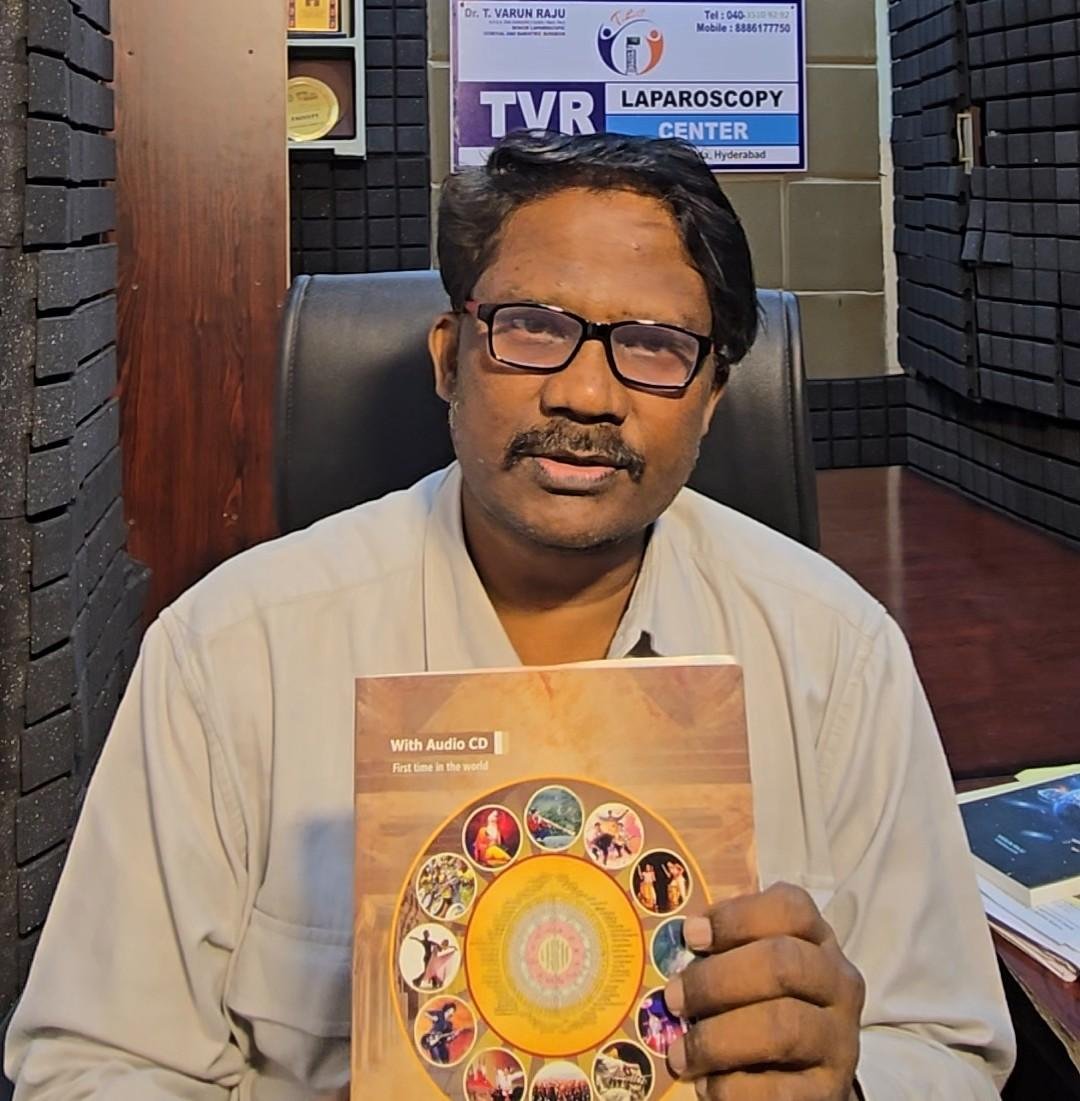
Dr varun raju thirumalagiri 's indian carnatic classical music research book with 2 CD. S of his 72 musical Compositions.
Raghavamshi Technologies’ Journey Toward a New Generation of Synthetic Cristobalite Production, In the world of advanced materials, some of the most important innovations begin with something remarkably simple: a mineral, a process and a question.
His journey spans decades of artistic experimentation, record-setting achievements, art education and community service. From an early passion for drawing in Bhanvad, Saurashtra, Gujarat, to an extraordinary career involving thousands of artworks, international recognitions and creative education initiatives, his story demonstrates how art can become both a personal pursuit and a means of creating
Dr. Jeswant John Thomas is a Bengaluru-based dental surgeon, automobile enthusiast, public speaker and community leader whose professional journey brings together healthcare, automobile collecting, automotive heritage preservation and responsible riding awareness.