Raghavamshi Technologies’ Journey Toward a New Generation of Synthetic Cristobalite Production, In the world of advanced materials, some of the most important innovations begin with something remarkably simple: a mineral, a process and a question.
Raghavamshi Technologies’ Journey Toward a New Generation of Synthetic Cristobalite Production
In the world of advanced materials, some of the most important innovations begin with something remarkably simple: a mineral, a process and a question.
Can a naturally occurring material be transformed into a higher-value industrial product through a cleaner, more controlled and scalable process?
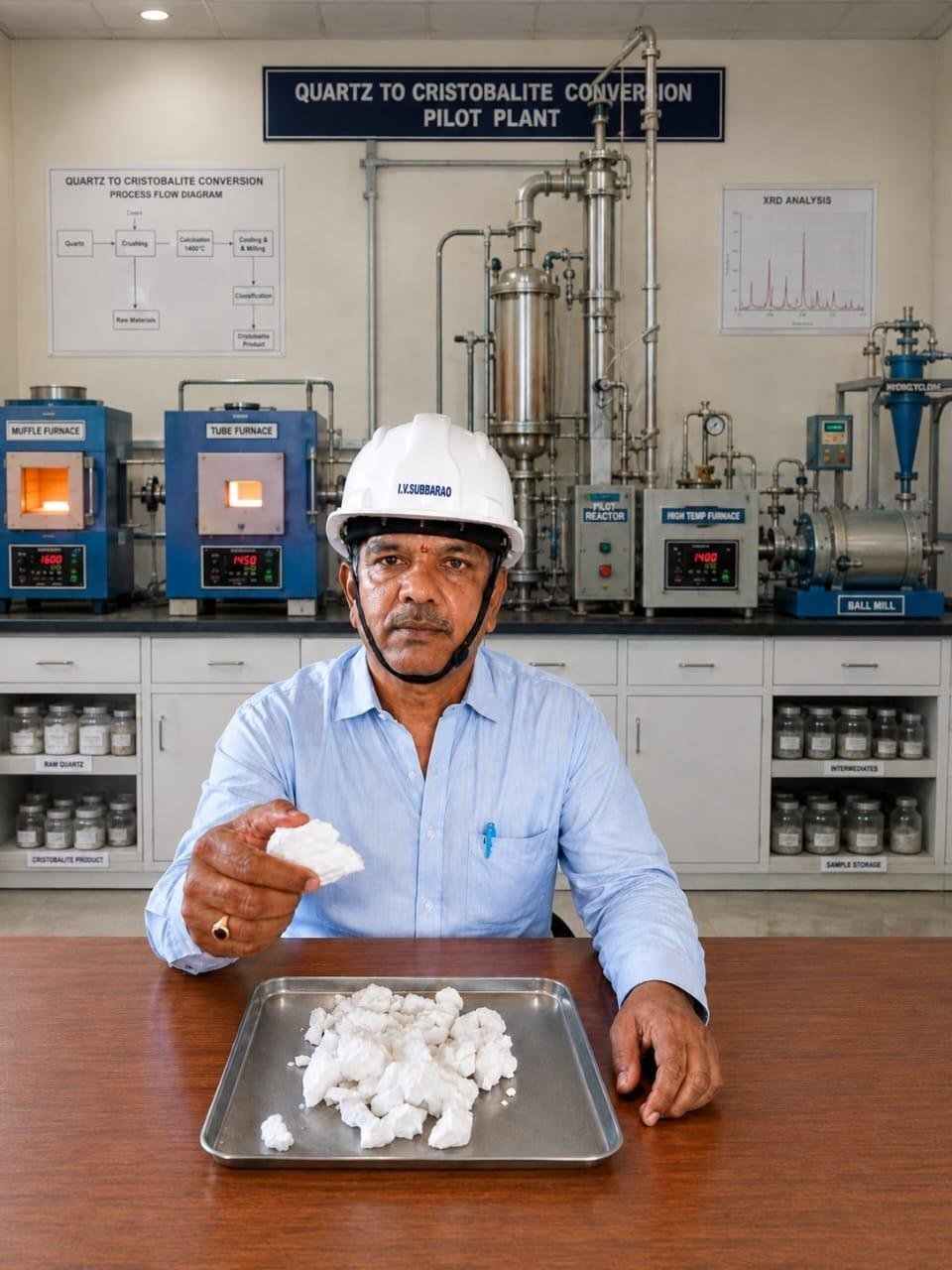
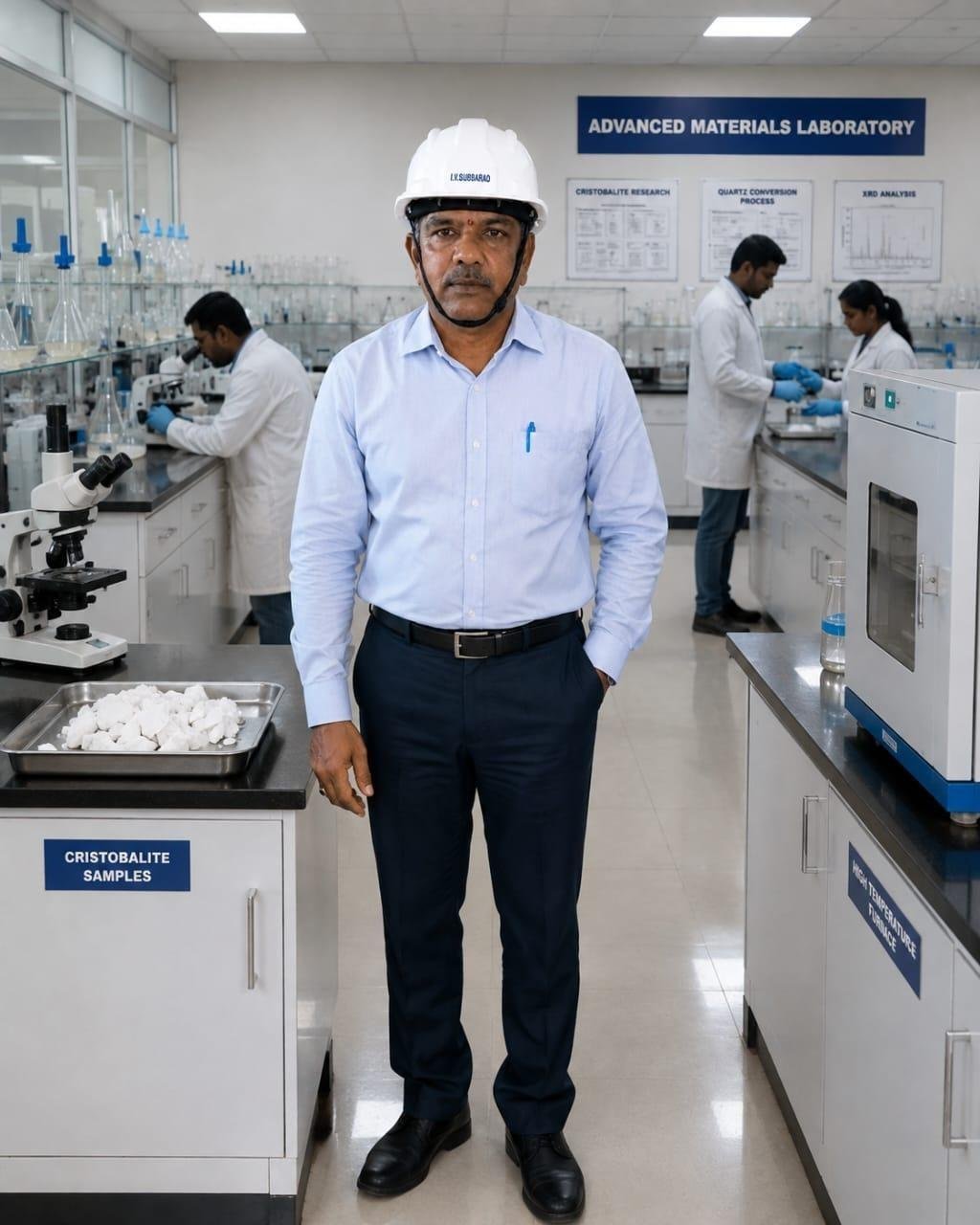
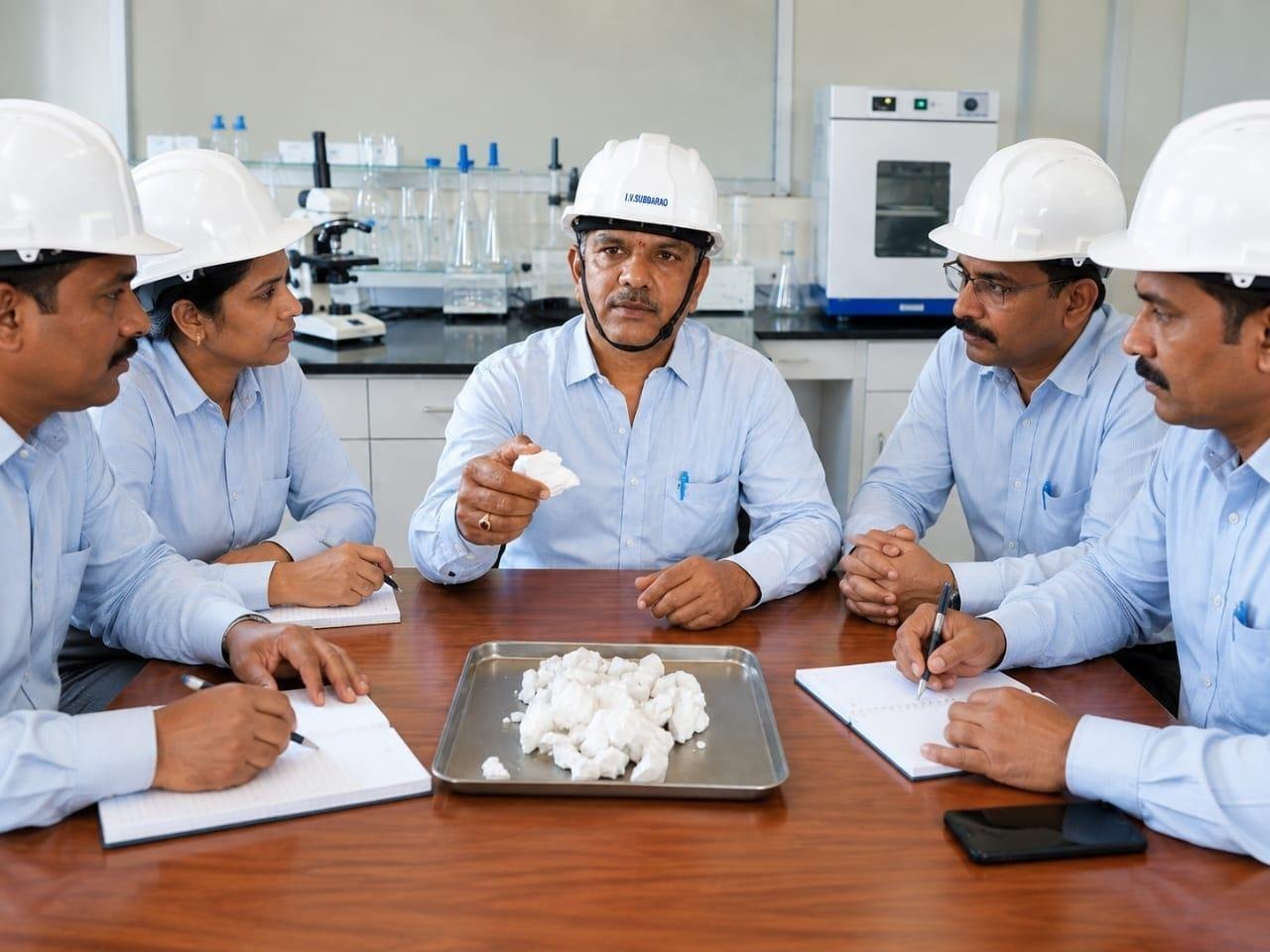
For I.V. Subba Rao, the answer has become the foundation of an ambitious technology development journey at Raghavamshi Technologies, Andhra Pradesh, India.
The company’s work focuses on an area of materials science that has significant relevance across ceramics, refractories, coatings, dental materials, specialty glass and other high-temperature applications: the controlled conversion of silica-rich raw materials into synthetic cristobalite.
At the heart of this work is an innovative approach based on continuous rotary-kiln and tunnel-kiln thermal processing, designed to promote quartz-to-cristobalite transformation without relying on conventional chemical fluxes, alkali additives or mineralizers.
The underlying idea is straightforward but technically significant.
Instead of using chemical additives to accelerate or manipulate the transformation, the process seeks to control the transformation through temperature, residence time, thermal gradients, feedstock characteristics and kiln design.
The result is a technology concept aimed at producing a predominantly crystalline cristobalite material while simplifying the chemistry of the process.
And for I.V. Subba Rao, this is not simply about producing another silica-based material.
It is about developing an industrial process capable of converting an abundant natural resource into a value-added advanced material.
From Natural Quartz to a High-Value Industrial Material
Silica is among the most abundant and technologically important materials used by modern industry.
Yet silica does not exist in only one structural form.
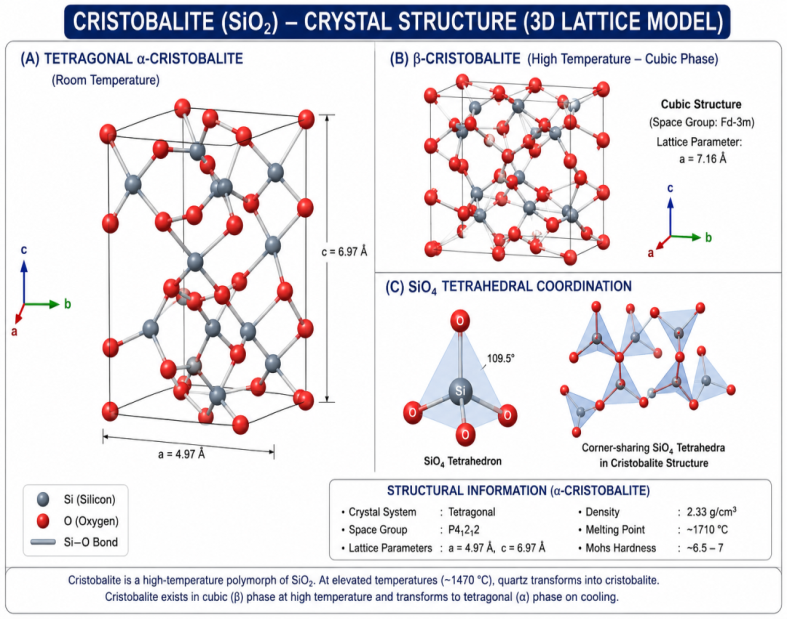
It occurs in several polymorphs, including quartz, tridymite and cristobalite, each possessing different crystal structures and thermal behaviours.
Cristobalite is particularly interesting because of its properties at elevated temperatures and its applications in industries where controlled thermal behaviour, whiteness, stability and material performance are important.
It has found applications in areas including:
Ceramics
Refractories
Glass
Paints and coatings
Dental materials
Foundry applications
Investment casting
Specialty silica products
Thermal-insulation materials
Electronic and semiconductor-related materials
High-temperature industrial technologies
The challenge, however, lies in producing cristobalite efficiently and consistently.
Traditional approaches can involve finely ground quartz, prolonged high-temperature treatment and, in some processes, the use of mineralizers or fluxing agents.
These approaches can create challenges involving energy consumption, reaction time, phase control and residual impurities.
Raghavamshi Technologies’ work approaches the problem differently.
The objective is to create a flux-free thermal transformation route in which the mineralogical transformation is driven primarily by carefully controlled thermal processing.
The Vision Behind the Technology
At the centre of this development is I.V. Subba Rao, whose work reflects a broader engineering philosophy: industrial innovation does not always require adding more chemistry.
Sometimes, innovation comes from understanding the material better.
Quartz-to-cristobalite conversion is fundamentally a structural transformation.
The silicon and oxygen framework of silica must reorganize from one crystal structure into another. Achieving this transformation efficiently requires the right combination of temperature, time, particle characteristics and heat transfer.
This makes kiln technology particularly important.
The process therefore looks beyond simply reaching a high temperature.
The objective is to control how the material experiences that temperature.
That distinction is critical in continuous industrial processing.
A material may reach the required temperature, but if heat transfer is uneven, residence time is insufficient or particle interiors remain comparatively cooler, transformation can remain incomplete.
Raghavamshi Technologies’ rotary-kiln concept addresses this challenge through controlled movement and thermal exposure.
An Innovative Rotary and Tunnel Kiln Approach
The proposed technology combines the principles of continuous thermal processing with a multi-zone heating strategy.
The rotary kiln can be understood as a controlled thermal environment in which feed material moves progressively through different temperature regions.
Rather than exposing the material to one uniform thermal condition, the process can be organised into distinct stages such as:
The initial stage gradually raises the temperature of the feedstock.
Controlled preheating is important because it reduces sudden thermal stress and prepares the material for the higher-temperature transformation region.
Feedstock moisture and other volatile components can also be addressed during this stage where applicable.
2. Reaction Zone
The material enters the region where the principal structural transformation begins to accelerate.
Here, temperature and residence time become critical process variables.
The objective is to promote rearrangement of the silica structure while maintaining controlled movement through the kiln.
3. High-Temperature Sintering Zone
The highest-temperature region provides the thermal environment required for extensive cristobalite formation.
The supplied experimental work identifies processing temperatures in the approximate range of 1700°C–1750°C for the sample described as B 0.5.
At these temperatures, the silica structure undergoes significant transformation, allowing cristobalite to become the dominant crystalline phase.
4. Controlled Cooling
Cooling is not simply the end of the process.
Cristobalite exhibits temperature-dependent structural behaviour, including the well-known reversible transition between high- and low-temperature forms.
The cooling regime therefore influences the final phase state of the material.
The supplied XRD interpretation identifies α-cristobalite, the low-temperature form, as the predominant cristobalite phase in the analysed sample.
The Flux-Free Difference
One of the most important aspects of this technology is its emphasis on a flux-free process.
Conventional mineral processing sometimes uses additives to influence reaction temperatures, accelerate transformation or modify crystal growth.
The Raghavamshi Technologies approach instead seeks to achieve the desired transformation through thermal control.
In principle, eliminating such additives can provide several advantages.
The process chemistry becomes simpler.
The number of foreign components introduced into the material is reduced.
The final product may have better chemical consistency.
And downstream applications that require controlled silica chemistry may benefit from the absence of intentionally introduced alkali or mineralizing agents.
This is particularly relevant for applications where purity and predictable phase composition matter.
The philosophy can be summarised simply:
Control the process rather than chemically forcing the transformation.
Understanding the Quartz-to-Cristobalite Transformation
The transformation described in this work is fundamentally a mineralogical and structural phenomenon.
The simplified pathway proposed is:
Quartz → High-Quartz → Cristobalite
The significance of the proposed pathway is the emphasis on avoiding significant formation of tridymite.
Tridymite is another high-temperature polymorph of silica.
From an industrial perspective, controlling which polymorphs form is important because different silica structures exhibit different physical and thermal characteristics.
The objective is therefore not merely to heat quartz until something changes.
The objective is to establish conditions under which the desired cristobalite phase becomes dominant.
This requires careful attention to:
Thermal profile
Peak temperature
Residence time
Feed particle size
Heat penetration
Material movement
Cooling conditions
Raw-material purity
These parameters collectively determine the kinetics and extent of transformation.
Why Feedstock Characteristics Matter
The proposed process is designed around high-purity natural quartz or amorphous silica.
The supplied technical description indicates that the feedstock may optionally undergo pretreatment to reduce impurities such as:
Fe₂O₃, TiO₂ and Al₂O₃.
Particle size is another important variable.
The described rotary-processing range is approximately 3 mm to 30 mm, although the optimal size distribution would ultimately depend on kiln configuration, feed characteristics, heat-transfer conditions and desired product specifications.
Particle size matters because thermal transformation is not simply a surface phenomenon.
When larger particles move through a high-temperature environment, the outer region can heat more rapidly than the internal core.
This can produce a temperature gradient within the particle.
If the internal region does not receive sufficient thermal exposure, residual quartz can remain.
This becomes particularly relevant when interpreting the XRD results obtained from the synthesized material.
What the XRD Results Reveal
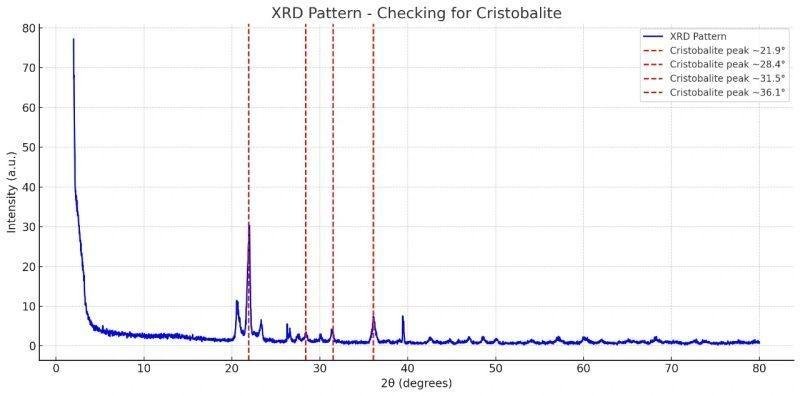
X-ray diffraction provides one of the most important tools for determining crystalline phase composition.
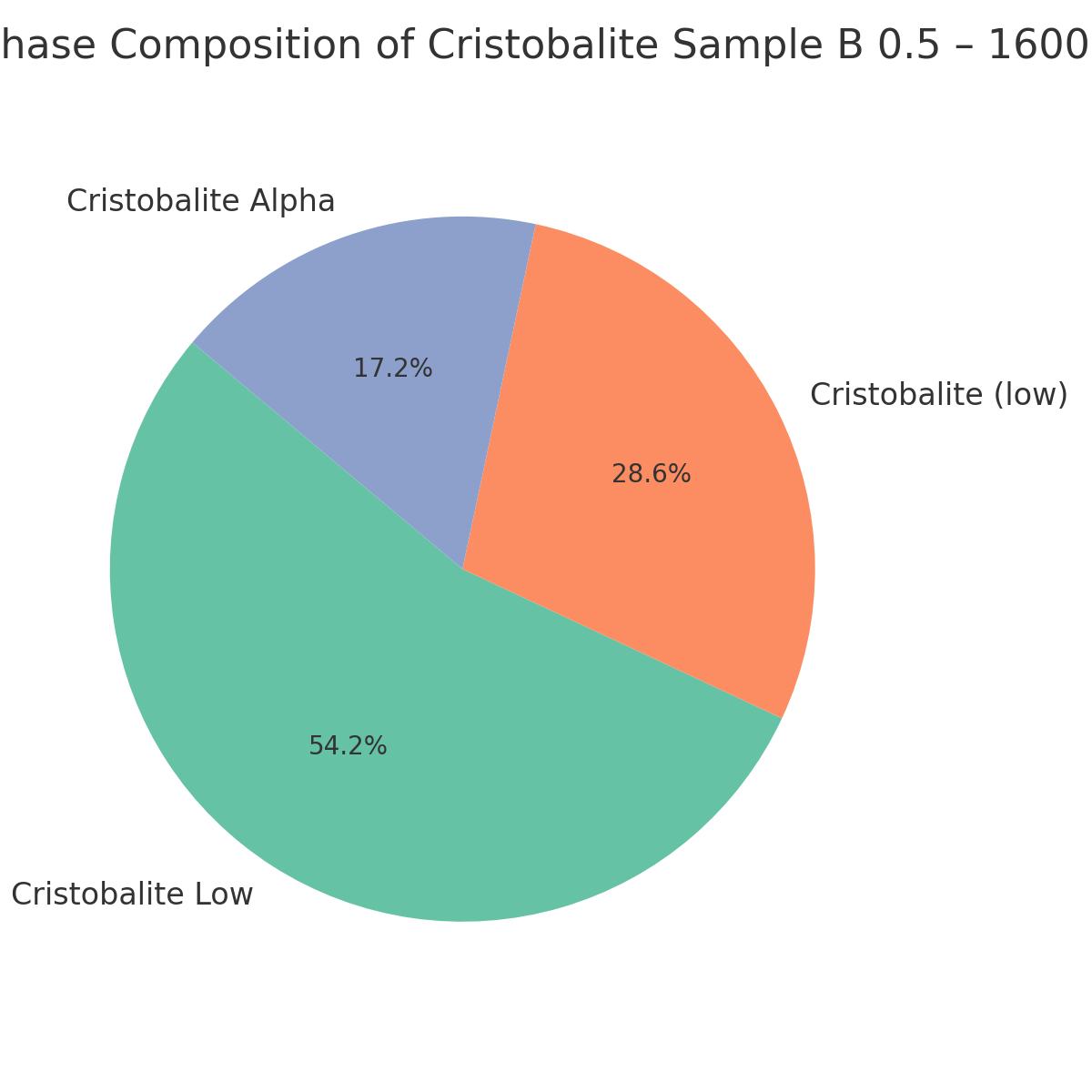
According to the supplied XRD interpretation, the analysed material contains approximately:
Phase
Approximate Content
Form
α-Cristobalite
~90%
Crystalline
Low Quartz
~10%
Crystalline
Glass/Amorphous Phase
Negligible / not detected
Non-crystalline
The identified reference codes supplied with the analysis include:
Cristobalite: 98-006-1813
Quartz: 98-004-0799
The result is significant because it demonstrates that cristobalite is the dominant crystalline phase in the analysed sample.
At the same time, the approximately 10% residual quartz indicates that the transformation was substantial but not complete.
That distinction is scientifically important.
Rather than describing the material as completely transformed, the data support a more precise conclusion:
The process achieved a high degree of quartz-to-cristobalite conversion, producing approximately 90% α-cristobalite in the analysed sample.
What the Residual Quartz Tells Us
The remaining quartz is not simply a limitation; it can also provide valuable information about the process itself.
Residual quartz may indicate that certain regions of the feedstock did not receive sufficient thermal exposure or that reaction kinetics were limited.
Possible contributing factors include:
Particle-core temperature differences
Feed particle size
Residence time
Heat-transfer limitations
Kiln temperature distribution
Material flow behaviour
Local variations in feed composition
Cooling history
This creates an important pathway for further optimisation.
If future process development can improve heat penetration and residence-time control, the degree of transformation may potentially be increased.
In industrial technology development, such findings are valuable because they help identify the next engineering challenge.
The XRD result therefore does more than confirm cristobalite formation.
It provides a window into the process itself.
Predominantly Crystalline Material
Another notable aspect of the supplied XRD interpretation is the absence of a distinct broad amorphous hump.
A broad hump in an XRD pattern can indicate significant glassy or amorphous material.
In the analysed sample, no distinct amorphous halo was reported.
Therefore, the amorphous or glass-phase content is considered negligible or below the practical detection limit of the analysis.
This suggests that the material is predominantly crystalline.
For applications where controlled thermal and structural behaviour is important, a predominantly crystalline material can be advantageous.
However, as with any XRD-based phase analysis, the exact detection limit depends on the instrument, measurement conditions, sample preparation and analytical method.
α-Cristobalite and β-Cristobalite
Understanding cristobalite requires another important distinction.
Cristobalite can exist in different temperature-dependent structural states.
The supplied analysis identifies α-cristobalite, the low-temperature form, while no detectable β-cristobalite is reported in the final analysed material.
At elevated temperatures, cristobalite undergoes a reversible structural transition between its high- and low-temperature forms.
The transition is commonly associated with a temperature range of approximately 200°C–270°C, depending on measurement conditions and material composition.
This behaviour is important for industrial applications because phase transitions can influence thermal expansion and dimensional stability.
Consequently, controlling the final phase composition is not merely a matter of laboratory classification.
It can influence how the material performs in actual applications.
Morphology and Microstructure
The supplied technical work also describes a dense, fine-grained cristobalite microstructure observed through scanning electron microscopy.
Microstructure is an important bridge between chemistry and performance.
Two materials can have similar chemical compositions while behaving differently because of differences in:
Grain size
Porosity
Particle bonding
Crystal morphology
Grain boundaries
Internal defects
Surface characteristics
A more homogeneous microstructure can contribute to more predictable material behaviour.
For industrial applications, this can become particularly relevant when the material is incorporated into ceramic bodies, coatings, composites or other engineered systems.
Further quantitative SEM analysis, including grain-size distribution and porosity measurements, could strengthen the understanding of the relationship between processing conditions and final performance.
XRD-1
XRD-2
XRD-3
Purity, Whiteness and Industrial Value
One of the attractive characteristics of cristobalite is its relevance to applications where brightness and controlled silica chemistry are desirable.
The supplied work reports reduced levels of impurities such as:
Fe₂O₃, Al₂O₃ and TiO₂.
Iron-bearing impurities, in particular, can influence colour and brightness in silica-based materials.
For applications such as coatings, paints, ceramics and specialty products, a cleaner feedstock and controlled processing route can therefore provide an important commercial advantage.
creates the technological proposition behind the Raghavamshi Technologies process.
Applications Across Multiple Industries
The potential applications of synthetic cristobalite extend well beyond a single industry.
Dental Ceramics
Cristobalite has relevance in dental ceramic systems because of its thermal behaviour and compatibility with certain porcelain-based materials.
Controlled thermal expansion characteristics can be important during processing and firing.
Consistent phase composition can therefore contribute to predictable behaviour.
Paints and Coatings
Cristobalite can serve as a functional mineral component in selected coating and paint formulations.
Its whiteness, hardness, thermal stability and surface characteristics can make it useful in applications requiring specific filler performance.
Refractories
High-temperature industries require materials capable of maintaining their performance under demanding thermal conditions.
Cristobalite can contribute to refractory formulations where controlled silica phases are appropriate.
Advanced Ceramics
Ceramic manufacturers increasingly require engineered raw materials with predictable characteristics.
Synthetic cristobalite offers the possibility of producing a more controlled silica-based feedstock compared with relying solely on naturally occurring mineral phases.
Foundry and Investment Casting
Silica-based materials are important throughout foundry and investment-casting processes.
The thermal behaviour and particle characteristics of engineered cristobalite can create opportunities in selected casting applications.
Specialty Glass
Controlled silica materials can have applications in specialty glass and high-temperature processing environments.
Thermal-Insulation Materials
The combination of thermal stability and engineered particle characteristics creates potential opportunities in thermal-management materials.
High-purity silica derivatives can play roles in selected glass, ceramic and composite systems used in electronics.
Any specific semiconductor application, however, would require rigorous qualification against application-specific purity, contamination and thermal specifications.
Photovoltaic and Solar Applications
As solar manufacturing expands, high-purity silica and silica-derived materials remain important across multiple stages of the broader manufacturing ecosystem.
The opportunity for cristobalite would depend on the specific process and required material specifications.
Aerospace and High-Temperature Technologies
Advanced engineering applications increasingly require materials capable of operating under demanding thermal conditions.
Synthetic silica polymorphs may find specialised applications where their thermal and structural properties align with system requirements.
Why Continuous Processing Matters
One of the major technological opportunities presented by the Raghavamshi Technologies concept is its focus on continuous kiln operation.
Traditional static furnaces operate in batches.
Material is loaded, heated, held for a specific duration, cooled and then removed.
Continuous rotary-kiln technology approaches the problem differently.
Feedstock can continuously enter the thermal system while transformed material exits after passing through controlled processing zones.
This can potentially offer:
Higher production continuity
Better process automation
More consistent residence time
Easier industrial scaling
Improved process monitoring
Reduced batch-to-batch variation
Greater integration with upstream and downstream operations
For industrial manufacturers, these factors can be as important as the chemistry itself.
A technically successful laboratory process must eventually become an economically viable manufacturing process.
That is where continuous kiln engineering becomes particularly important.
The Industrial Engineering Challenge
Scaling a high-temperature mineral transformation process is not simply a matter of building a larger kiln.
As production capacity increases, several engineering parameters become more complex.
Heat transfer must remain consistent.
Material flow must remain predictable.
Residence time distribution must be controlled.
Temperature gradients must be minimised.
Fuel or electrical energy must be managed efficiently.
Dust and particulate emissions must be controlled.
And the final product must meet consistent quality specifications.
The long-term success of a technology such as this therefore depends on integrating mineralogy, thermal engineering, mechanical design, process control and quality assurance.
This multidisciplinary nature is precisely what makes the project technologically interesting.
From Research to Industrial Technology
The significance of Raghavamshi Technologies' work lies not only in the formation of cristobalite, but in the attempt to create a pathway toward industrial-scale production.
The removal of chemical fluxes from the process simplifies the conceptual chemistry.
The use of rotary and tunnel kiln systems introduces a continuous-processing pathway.
The use of XRD provides a mechanism for monitoring phase composition.
And the focus on raw-material purification addresses the requirements of higher-value applications.
Together, these elements form a technology platform rather than simply a single laboratory experiment.
A Technology Built Around Process Control
At its core, the innovation is about control.
Control of:
Temperature.
Residence time.
Feedstock.
Particle size.
Heat transfer.
Atmosphere.
Cooling.
Phase composition.
That control is what determines whether quartz remains quartz, transforms into cristobalite or produces unwanted intermediate phases.
The ability to control these variables continuously is therefore central to the commercial potential of the technology.
The Broader Significance of Flux-Free Manufacturing
Industrial sustainability is increasingly moving beyond the simple question of whether a process consumes less energy.
Manufacturers are also examining:
Chemical inputs
Process waste
Material purity
Emissions
Process complexity
Resource utilisation
Recyclability
Scalability
A flux-free approach addresses one part of that broader equation by reducing dependence on intentionally added chemical modifiers.
However, the overall environmental performance of the process will ultimately depend on the complete energy balance, kiln efficiency, fuel source, emissions-control system and production scale.
This distinction is important.
The technology's environmental proposition should therefore be evaluated through a complete industrial lifecycle assessment rather than simply from the absence of fluxes.
The Road Ahead for Raghavamshi Technologies
The current findings create several promising avenues for future development.
The most immediate opportunity is process optimisation.
The approximately 10% residual quartz identified by XRD provides a clear target for further engineering.
Future work could investigate the influence of:
Peak temperature
Residence time
Feed particle size
Heating rate
Kiln rotation speed
Material bed depth
Oxygen/atmosphere conditions
Cooling rate
Raw-material purity
Feedstock morphology
Systematic experimentation could reveal the conditions that maximise cristobalite formation while maintaining energy and production efficiency.
Further characterisation could also include:
Quantitative Rietveld refinement
Detailed SEM analysis
Particle-size distribution
BET surface-area measurements
Chemical impurity analysis
Thermal expansion testing
Differential thermal analysis
Mechanical performance testing
Long-term thermal stability studies
Such data would help connect the material's crystal structure with its actual industrial performance.
A Larger Vision for Advanced Silica Materials
The story of Raghavamshi Technologies is ultimately part of a much larger industrial transition.
Modern manufacturing increasingly depends on converting naturally available materials into engineered products with precisely controlled properties.
The difference between a raw mineral and an advanced industrial material is often not the chemistry alone.
It is the process.
The ability to control that process determines quality, consistency, cost and scalability.
This is where the work of I.V. Subba Rao and Raghavamshi Technologies becomes particularly relevant.
Their approach explores how a relatively abundant raw material such as natural quartz can potentially be transformed into a higher-value engineered silica phase through controlled thermal processing.
The Innovation in Perspective
The technology can be viewed through five central principles:
1. Natural Resource Utilisation
High-purity natural quartz or silica provides the starting material.
2. Flux-Free Transformation
The process seeks to promote quartz-to-cristobalite conversion without alkali fluxes, mineralizers or other chemical additives.
3. Continuous Thermal Processing
Rotary and tunnel kiln concepts provide a pathway toward continuous industrial production.
4. Phase Control
XRD analysis is used to identify the crystalline phases produced and assess the extent of transformation.
5. Multi-Industry Potential
The resulting cristobalite has potential relevance across ceramics, refractories, coatings, dental materials, specialty glass, foundry materials and other high-temperature applications.
Together, these principles define the technological direction being pursued.
Conclusion: Building a New Path for Synthetic Cristobalite
The work being developed by Raghavamshi Technologies, Andhra Pradesh, represents an interesting intersection of mineral science, thermal engineering and industrial innovation.
The objective is ambitious: to develop a continuous, scalable and flux-free route for converting natural quartz into synthetic cristobalite.
The supplied XRD analysis provides an encouraging result, identifying approximately 90% α-cristobalite and 10% residual low quartz, with no significant detectable amorphous phase reported.
The result demonstrates substantial phase transformation while also identifying an important opportunity for further optimisation.
The residual quartz points toward the next challenge: improving heat transfer, residence-time control and transformation kinetics to increase conversion efficiency while maintaining industrial practicality.
But perhaps the most important aspect of the technology is the philosophy behind it.
Rather than relying primarily on chemical additives to force a mineralogical transformation, the approach seeks to use process engineering itself as the tool of innovation.
Temperature becomes a design parameter.
Residence time becomes a control mechanism.
Kiln movement becomes part of the chemistry.
And mineralogy becomes the foundation for industrial engineering.
For I.V. Subba Rao and Raghavamshi Technologies, the journey therefore extends beyond the production of cristobalite.
It represents an effort to build a technology platform capable of creating higher-value materials from natural resources through controlled, scalable and potentially cleaner industrial processing.
As industries worldwide continue searching for advanced materials that combine performance, consistency, purity and manufacturing efficiency, innovations in silica processing could become increasingly important.
The transformation begins with quartz.
But the larger story is about what technology can make possible.
From natural mineral to engineered material.
From laboratory transformation to continuous industrial processing.
From conventional processing to a new generation of flux-free technology.
That is the vision behind Raghavamshi Technologies' work—and the next chapter of this innovation is only beginning.
Technology Profile
Technology: Flux-Free Synthetic Cristobalite Production Process: Continuous Rotary Kiln & Tunnel Kiln Thermal Processing Primary Feedstock: High-Purity Natural Quartz / Amorphous Silica Reported Processing Temperature: Approximately 1700°C–1750°C for the analysed sample Reported XRD Phase Composition: ~90% α-Cristobalite + ~10% Low Quartz Fluxes/Mineralizers: Not intentionally used in the described process Location: Andhra Pradesh, India Organisation: Raghavamshi Technologies Technology Contact: I.V. Subba Rao Email:ivsrao2003@yahoo.co.in Additional Emails:raatechs12@yahoo.com| raatech12@rediffmail.com Contact: +91 75691 60194
Technical note: The phase percentages and process claims above are presented based on the technical information and XRD interpretation supplied for this article. Industrial-scale performance, energy efficiency, emissions performance and final product specifications should be independently validated through appropriate testing and process qualification.
Based in Hyderabad, Telangana, Dr. Varun Raju has spent decades building a career that extends well beyond the operating room. He has worked as a professor of surgery, trained postgraduate surgeons, contributed to surgical literature, authored books, created medical illustrations for international publications
His journey spans decades of artistic experimentation, record-setting achievements, art education and community service. From an early passion for drawing in Bhanvad, Saurashtra, Gujarat, to an extraordinary career involving thousands of artworks, international recognitions and creative education initiatives, his story demonstrates how art can become both a personal pursuit and a means of creating
Dr. Jeswant John Thomas is a Bengaluru-based dental surgeon, automobile enthusiast, public speaker and community leader whose professional journey brings together healthcare, automobile collecting, automotive heritage preservation and responsible riding awareness.